
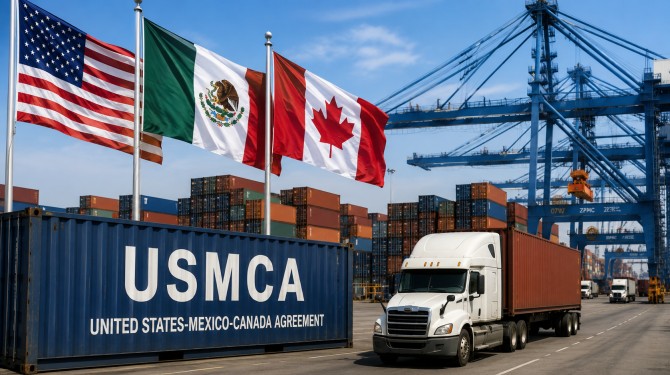
Mexico has embarked on its first annual review of the United States-Mexico-Canada Agreement (USMCA) as part of efforts to alleviate escalating trade tensions with the United States. This move comes amidst concerns over the potential imposition of new tariffs by the U.S. on imports from over 60 countries, including Mexico. To address these issues, Mexican President Claudia Sheinbaum is set to engage in discussions with U.S. Trade Representative Jamieson Greer in Mexico City, following a series of technical meetings between officials from both nations.
The discussions between Mexico and the United States are taking place as President Donald Trump continues to contemplate the introduction of additional tariffs. These tariffs could significantly impact trade relations across multiple countries. The U.S. is advocating for stricter enforcement of rules of origin, aiming to ensure that products benefiting from the USMCA are genuinely manufactured within North America, rather than being routed through Mexico from other nations.
During his address to U.S. lawmakers, Greer indicated that provisional agreements concerning the USMCA might be reached by the end of 2026. Nevertheless, he acknowledged that negotiations on more intricate matters, such as labor standards, environmental commitments, and rules of origin, are anticipated to extend into 2027. These complex issues remain central to the ongoing dialogue and are pivotal for the future of the trade agreement.
The United States’ push for tighter rules of origin reflects its commitment to reinforcing the integrity of the USMCA. By ensuring that products are genuinely made in North America, the U.S. aims to protect its market and promote fair trade practices. These efforts underscore the importance of the current negotiations and highlight the challenges that lie ahead in balancing the diverse interests of the involved countries.