
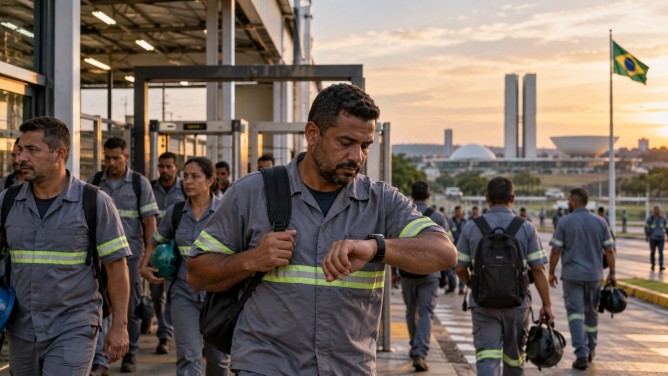
Brazil’s Congress has approved a constitutional amendment to reduce the maximum workweek from 44 to 40 hours, a move that is expected to impact over 30 million workers. This legislative change is a significant victory for President Luiz Inácio Lula da Silva, who has championed the reform as a means to improve work-life balance and enhance the quality of life for Brazilian workers.
The Senate overwhelmingly passed the reform with 75 votes in favor and only one against, following its earlier approval in the lower house in May. The amendment aims to phase out the six-day workweek that many employees, especially in sectors like retail, restaurants, and hotels, have been accustomed to. Under the new system, workers will have more time for rest, family, and personal activities.
Lula has been a strong advocate for this change, arguing that it is crucial for workers to have more time to spend with their families, which could improve their overall well-being. The approval of this reform could potentially bolster Lula’s campaign in the upcoming presidential runoff on October 25, as it resonates particularly well with low-income workers who often endure long working hours.
Initially opposed by far-right senator Flávio Bolsonaro, Lula’s main opponent in the election, the reform later gained Bolsonaro’s support due to growing public backing. The proposal began as a grassroots campaign focused on achieving a better balance between work and personal life, eventually gaining the support of Lula’s political party. Proponents of the reform argue that a shorter workweek could lead to improved physical and mental health for workers, as well as increased opportunities for education and family care.
Despite the Senate’s approval, the reform will not take effect immediately. Once formally promulgated, there will be a 60-day transition period during which the maximum workweek will first be reduced to 42 hours, before eventually reaching 40 hours over the subsequent 14 months.
This decision arrives at a pivotal moment in Brazil’s presidential election campaign, providing Lula with a tangible achievement in workers’ rights and economic well-being. As the runoff approaches, this reform could be a decisive factor in swaying voters who prioritize labor rights and personal well-being.