
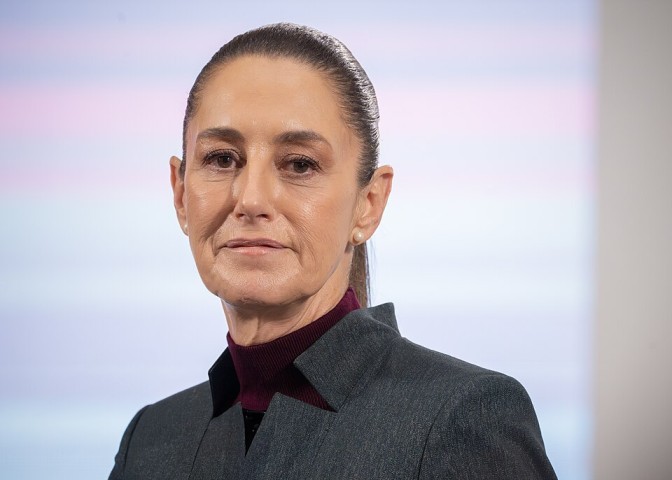
Claudia Sheinbaum, the President of Mexico, is facing increased pressure following the surrender of two former officials from Sinaloa state to U.S. authorities. Gerardo Mérida Sánchez, the former security minister, crossed into Arizona and was detained by U.S. marshals, while Enrique Díaz Vega, Sinaloa’s former finance minister, was taken into custody in New York. Both men, affiliated with Sheinbaum’s Morena party, are implicated in a broader indictment involving ten Sinaloa officials, including Governor Rubén Rocha Moya, for alleged connections to the Sinaloa cartel and their involvement in the drug trade into the United States.
Governor Moya has dismissed these charges as baseless, and Sheinbaum has resisted extraditing him, citing a lack of evidence from U.S. authorities. On Monday, Sheinbaum reiterated her stance on maintaining national sovereignty and distanced her government from organized crime. “We’re not going to cover for anyone under any circumstances,” she stated, questioning the U.S.’s interest in Mexico and suggesting they focus on domestic issues like drug consumption and weapon flow.
The surrender of Mérida and Díaz lends credibility to the U.S. Justice Department’s indictment, as noted by security analyst Eduardo Guerrero, who argued that the voluntary surrender suggests the charges are substantial. Their cooperation could provide critical evidence against Rocha Moya, potentially strengthening Washington’s case. Arturo Sarukhán, a former Mexican ambassador to the U.S., noted the growing perception in Washington that Sheinbaum is delaying, warning that others among the indicted might seek deals with U.S. law enforcement, which could be detrimental to Morena.
Adding to Sheinbaum’s challenges, Terry Cole, the DEA administrator, recently testified before the U.S. Senate, indicating that Rocha’s indictment is just the beginning of actions against officials within the Morena party. This follows reports of the Trump administration’s directive for federal prosecutors to use terrorism charges against corrupt Mexican officials, as revealed by Aakash Singh, an associate deputy attorney general, according to an unnamed source.
Sheinbaum’s relationship with Washington has been strained, particularly after revelations of CIA operations in Mexico without the federal government’s awareness, including involvement in the assassination of a cartel member. The increased scrutiny and actions against current officials, including those within her own party, have pushed Sheinbaum to a critical juncture in her dealings with U.S. authorities. Sarukhán described the situation as a series of “dominoes folding one after the other,” highlighting the precarious position Mexico’s leadership finds itself in.