
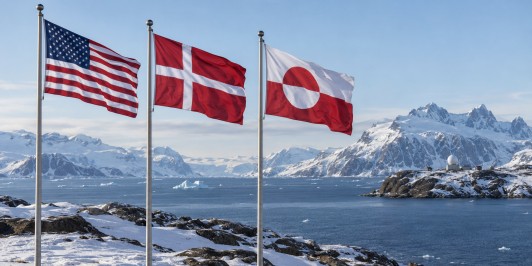
The United States is set to bolster its military capabilities in the Arctic and North Atlantic with a new trilateral agreement, significantly expanding its presence in Greenland. This move could transform the strategic landscape in the region, where tensions have often flared over security interests.
US President Donald Trump, alongside Danish Prime Minister Mette Frederiksen and Greenland Prime Minister Jens-Frederik Nielsen, signed the agreement during the United Nations General Assembly in New York. While the agreement does not grant the US control over Greenland, it facilitates a substantial increase in US military infrastructure, allowing the establishment of defense areas at Narsarsuaq and Mestersvig and the development of a “Golden Dome” missile defense system.
This pact amends the 1951 US-Denmark defense agreement, granting broader access for US military aircraft and vessels across Greenland’s territorial waters. Furthermore, it restricts non-NATO countries from setting up military installations on the island and places limitations on foreign investments in critical sectors like infrastructure and resource extraction, reflecting strategic priorities.
Despite the military emphasis, the agreement respects Greenland’s sovereignty and requires approval from Denmark and Greenland’s parliaments before implementation. This was particularly important in maintaining Greenland’s self-governing status within the Kingdom of Denmark, especially after past US interest in acquiring the island stirred diplomatic tensions.
Greenland’s strategic significance, positioned between North America and Europe and rich in mineral resources, has long made it a focal point of international security discussions. The US already operates the Pituffik Space Base in northwestern Greenland, and this new agreement marks the most significant expansion of American military facilities on the island since the Cold War.