
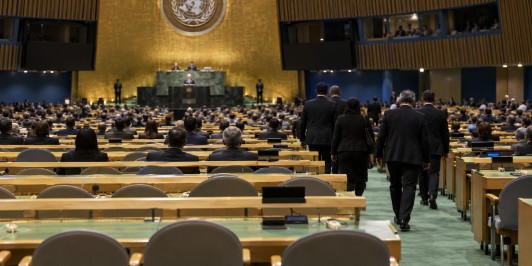
The diplomatic tensions between the United States and both Iran and Cuba were palpable at the United Nations General Assembly when representatives from these nations staged a walkout during U.S. President Donald Trump’s speech. The delegations reacted to Trump’s sharp critiques, highlighting the strained relations and the potential implications for international diplomacy.
As President Trump addressed the assembly on September 22, he emphasized the United States’ stance on Iran, signaling a choice between reaching an agreement with Tehran or facing further actions from Washington. This statement prompted the Iranian representatives to exit the chamber, underscoring the fragile state of U.S.-Iran relations. Iranian President Masoud Pezeshkian and Foreign Minister Abbas Araghchi, while present in New York for the assembly, were notably absent during the speech, suggesting premeditated avoidance of direct confrontation.
The Cuban delegation followed suit in their own protest after Trump labeled Cuba a “failed state” and called for fundamental changes on the island. His comments about ensuring freedom in Cuba and preventing foreign adversaries from establishing a presence there further strained the already tense U.S.-Cuba relationship. This walkout emphasizes the ongoing discord and challenges in U.S.-Cuba relations, particularly under the Trump administration.
The incident unfolded as Trump laid out his administration’s positions on several international issues, using the high-profile platform of the UN General Assembly to assert U.S. foreign policy priorities. His remarks have further highlighted the polarized nature of U.S. diplomacy with these nations, which may impact future negotiations and international collaborations.