
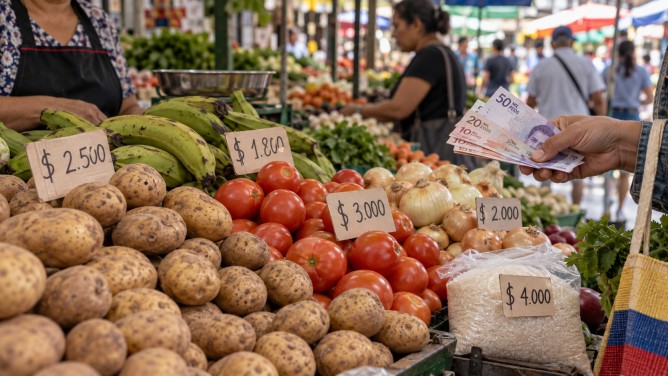
Colombia’s annual inflation rate climbed to 6.29% in September 2026, marking its highest level since July 2024, as food prices continue to exert significant pressure on the cost of living. This increase from 6.24% in August highlights ongoing challenges in controlling consumer price hikes, which rose 0.37% during the month alone.
Food prices emerged as a primary driver of inflation, with costs rising by 0.78% in September and standing 6.74% higher than the previous year. Potatoes, in particular, saw a dramatic 78% increase over the past 12 months, influenced by adverse weather conditions and seasonal harvest cycles affecting agricultural supplies. Education costs also contributed to inflationary pressures, experiencing a 1.43% rise in September, the most substantial monthly increase among all categories.
In response to persistent inflation, Colombia’s central bank recently raised its benchmark interest rate to 12.25%. This move reflects concerns that inflation pressures have expanded beyond food and utilities to other parts of the consumer basket. However, some policymakers argue that higher interest rates have limited impact on price increases driven by food, housing, and utility costs.
Despite the overall rise, there are signs of moderation in certain areas. Inflation, excluding food and regulated prices, decreased from 6.27% to 6.18%, marking the first decline after six months of consecutive increases. Nevertheless, economists remain concerned about the outlook, predicting that food prices will continue to be a significant source of inflationary pressure through the end of 2026.
The latest inflation figures could also influence discussions over Colombia’s minimum wage for 2027, as rising living costs become a key factor in negotiations between workers, employers, and the government. Policymakers are expected to closely monitor food prices, weather conditions, and broader price pressures before making further decisions on interest rates.