
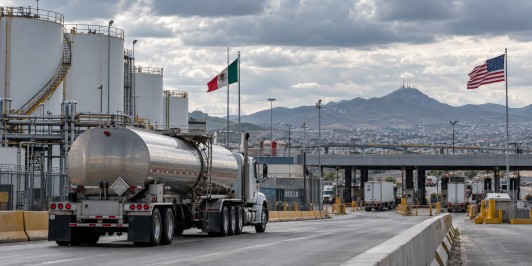
Mexico faces potential fuel supply challenges as the United States considers restricting diesel exports, a move supported by U.S. President Donald Trump. Such a decision could severely impact Mexico, which depends on U.S. imports for over 40% of its diesel needs. As of June 2026, the country imported approximately 288,000 barrels of diesel per day from the U.S., according to energy data.
The potential interruption in U.S. diesel supplies could compel Mexico to seek alternative sources from more distant markets, leading to increased transportation costs. This shift might exert upward pressure on fuel prices and inflation, affecting key sectors such as transportation, agriculture, and mining. The situation arises amidst a global increase in energy prices, exacerbated by conflicts in the Middle East and Ukraine.
Mexican President Claudia Sheinbaum reassured the public that domestic production remains sufficient, citing the country’s refinery network, including the Dos Bocas refinery in Tabasco, to support diesel supply. She emphasized that the government would continue to back diesel prices through subsidies and a voluntary price agreement with fuel retailers.
In light of the uncertainty surrounding U.S. energy policy, energy experts advise Mexico to diversify its diesel import sources, enhance domestic refining capacity, and bolster fuel storage infrastructure. These measures aim to mitigate the risks associated with potential disruptions from its largest diesel supplier.
The Mexican government has proactively maintained support for diesel prices via tax measures and additional assistance to counteract the impact of escalating international energy costs. With global fuel supply uncertainties looming, Mexico is striving to reduce its reliance on U.S. diesel imports, thereby fortifying its energy security.